Postgraduate Interaction Design

InteractionDesign.

Understanding people.
Shaping possibilities.

Interaction Design starts with people: their needs, abilities, relationships and the situations in which they live and work. It explores how products, services, environments and technologies can support useful, meaningful and inclusive experiences.

Interaction Design at SETU Carlow Campus supports students in using human-centred research to question assumptions, understand lived experience and evaluate existing solutions to develop appropriate solutions that are useful and usable. Design for human need rather than design for design’s sake.

Students identify and frame their own project, supported by academic supervision. It may develop from a personal interest, a workplace challenge or an opportunity explored with an external organisation.

The outcome may be a physical product, a service, a communication approach, a digital tool or a combination. Research, prototyping and evaluation with people guide the form it takes.

Level 9 · Carlow campus · Explore the Postgraduate Diploma

Featured student work

Different contexts. A shared focus on people.

Family interaction / Co-regulation

Trellis

Rethinking how screen time ends.

Thomas Drummy · Interaction Design, SETU

  • Relationships
  • Timing
  • Shared participation

The human question

How can a transition away from screen time give both parent and child a voice?

The design response

The project shifted attention to how online engagement ends. Trellis proposes a co-regulatory transition system that replaces an abrupt stop with a process involving both parent and child.

Designing a relationship

The focus is how people negotiate a shared moment: timing, agency and the experience of a transition.
Farming / Everyday work

Trayce

Making everyday farm activity easier to capture and retrieve.

Kamsiriochukwu Nwanekezie (Kamsi) · Interaction Design, SETU

  • Everyday routines
  • Recording and retrieval
  • Farm life

The human question

How can farm activities be recorded as they happen, with less pressure from administrative deadlines?

The design response

Trayce encourages farmers to capture daily events as recorded, retrievable moments. It connects practical record keeping with a lasting account of life on the farm.

Designing around real routines

The starting point is the person doing the work: their activities, administrative pressures and memories.

Community / Non-digital service concept

The Good Neighbour

Creating opportunities for purpose and connection in later life.

Carla Anne Lloren · Interaction Design, SETU

UX Design Awards · Spring 2026 New Talent nominee

  • Sense of purpose
  • Social connection
  • Physical touchpoints

The human question

How might older adults experience a stronger sense of purpose and connection in their neighbourhood?

The design response

A community service concept using local encounters and physical gratitude cards. The research led to a non-digital approach that accommodates people who do not use apps.

People guide the medium

The response takes shape through a service and physical touchpoints, with human-centred research guiding the choice.

Read the project profile (opens in a new tab)

Physical products · Services · Digital experiences

What we investigate

Different projects. A shared focus on people.

The strength of the programme lies in understanding people and their context, then using that understanding to guide design. Students explore which form of intervention fits the situation and evaluate how well it supports the people involved.

Understand lived experience

Investigate goals, routines, constraints and relationships. Research helps distinguish the problem people experience from the solution first imagined for them.

Choose the appropriate response

Consider physical objects, services, communication, environments and digital tools. Let research guide the choice of medium, the sequence of actions and the feedback people receive.

Make, test and reflect

Use prototypes and participant feedback to question assumptions and refine ideas. Evaluate usefulness, accessibility and inclusion, considering who benefits and what consequences follow.

Learning in practice

Design begins with people. Ideas develop together.

Interaction Design is a way of investigating human experience as well as creating responses to it. Conversation, shared questions and practical exploration help us move beyond our first assumptions.

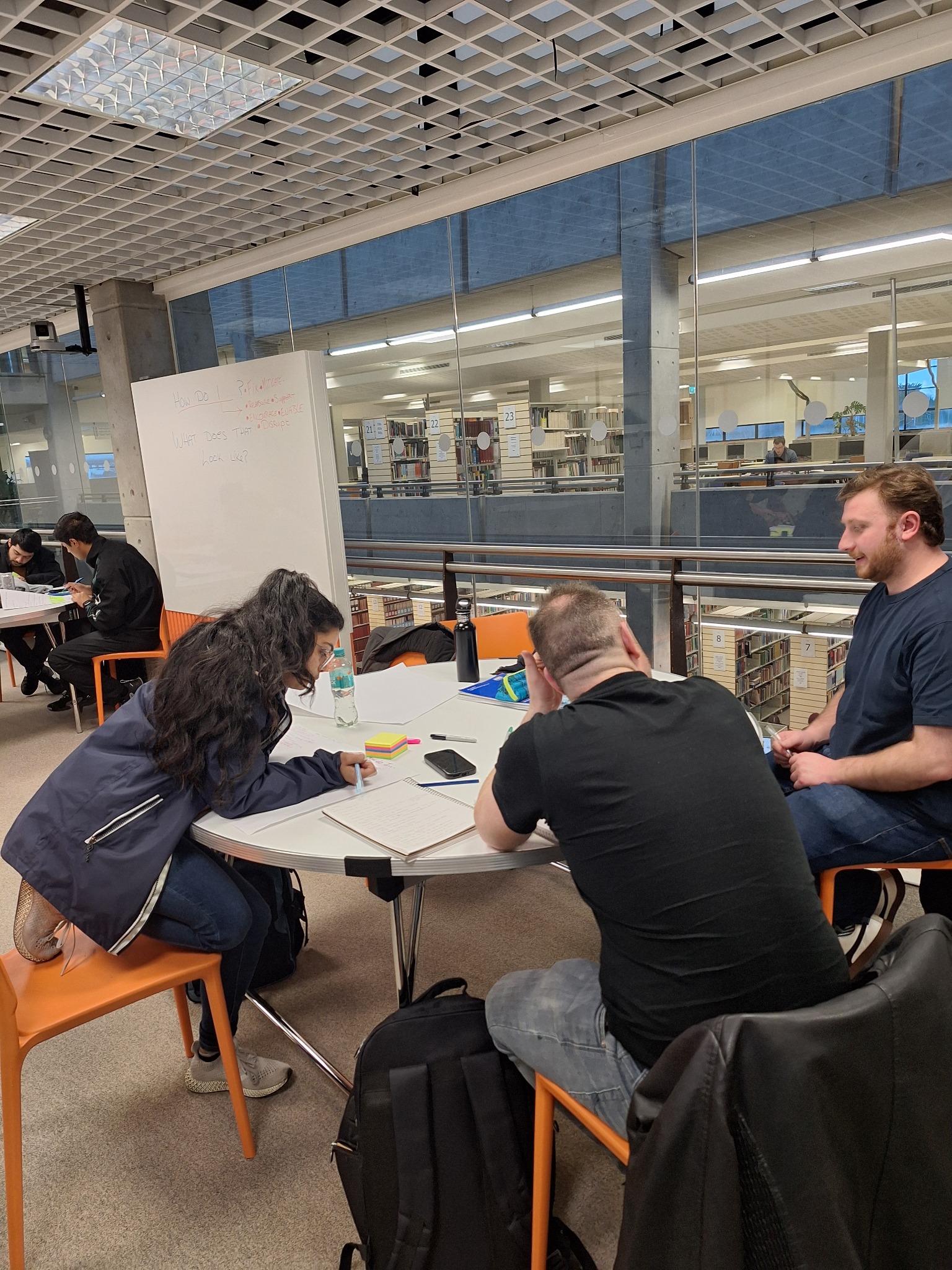
These moments from our learning sessions show the thinking behind the outcomes: listening, discussing, organising evidence and making possibilities tangible. A useful solution begins with understanding the people it is intended to support.

Select any photograph to view the full-size image in a new tab.

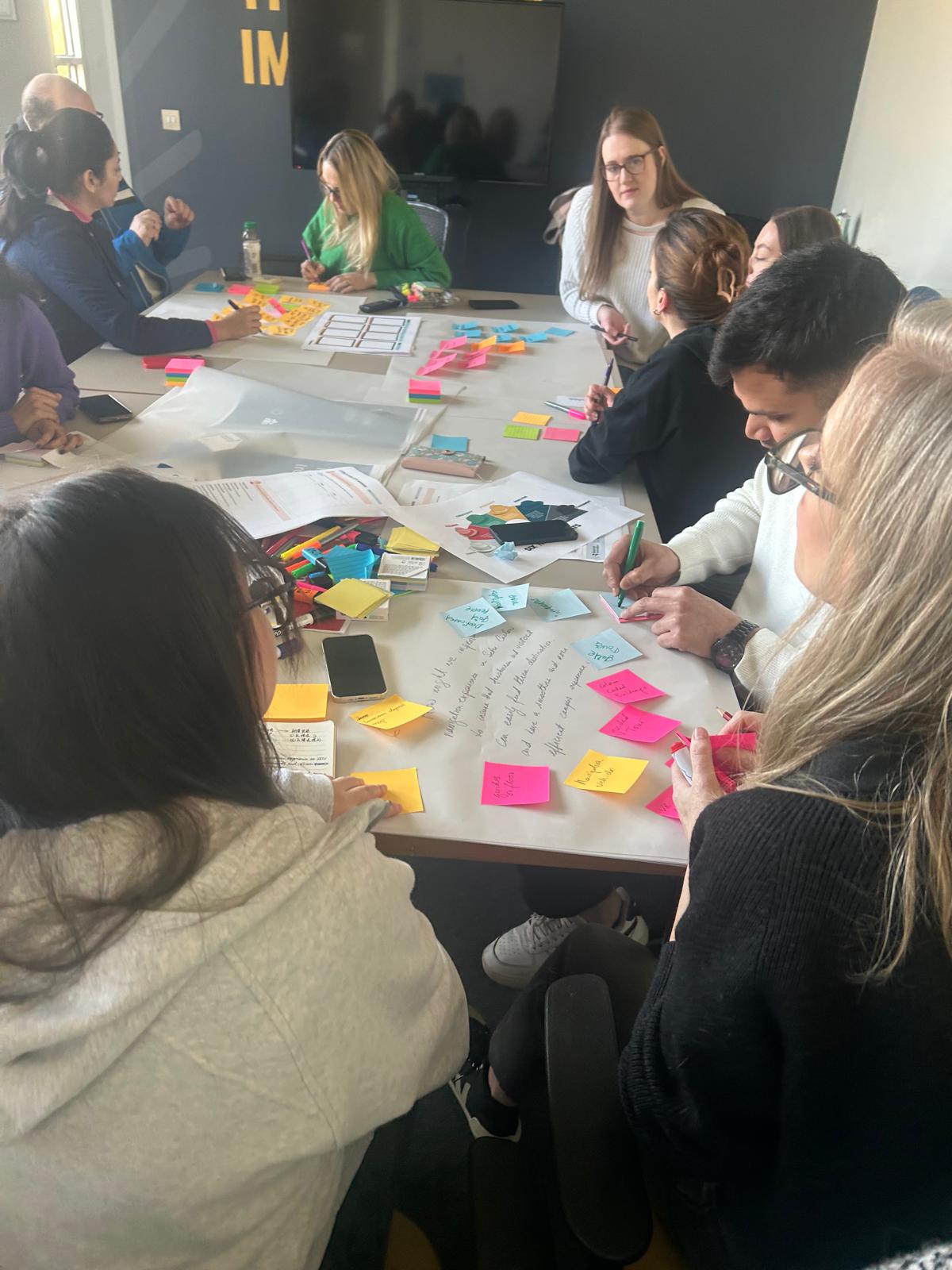
A group working together around a table covered with handwritten sheets and colourful sticky notes.
Co-design in practiceSharing perspectives and making ideas visible together.
Students discussing and writing at a round table in the campus library.
Start with conversationListening, discussing and developing questions together.
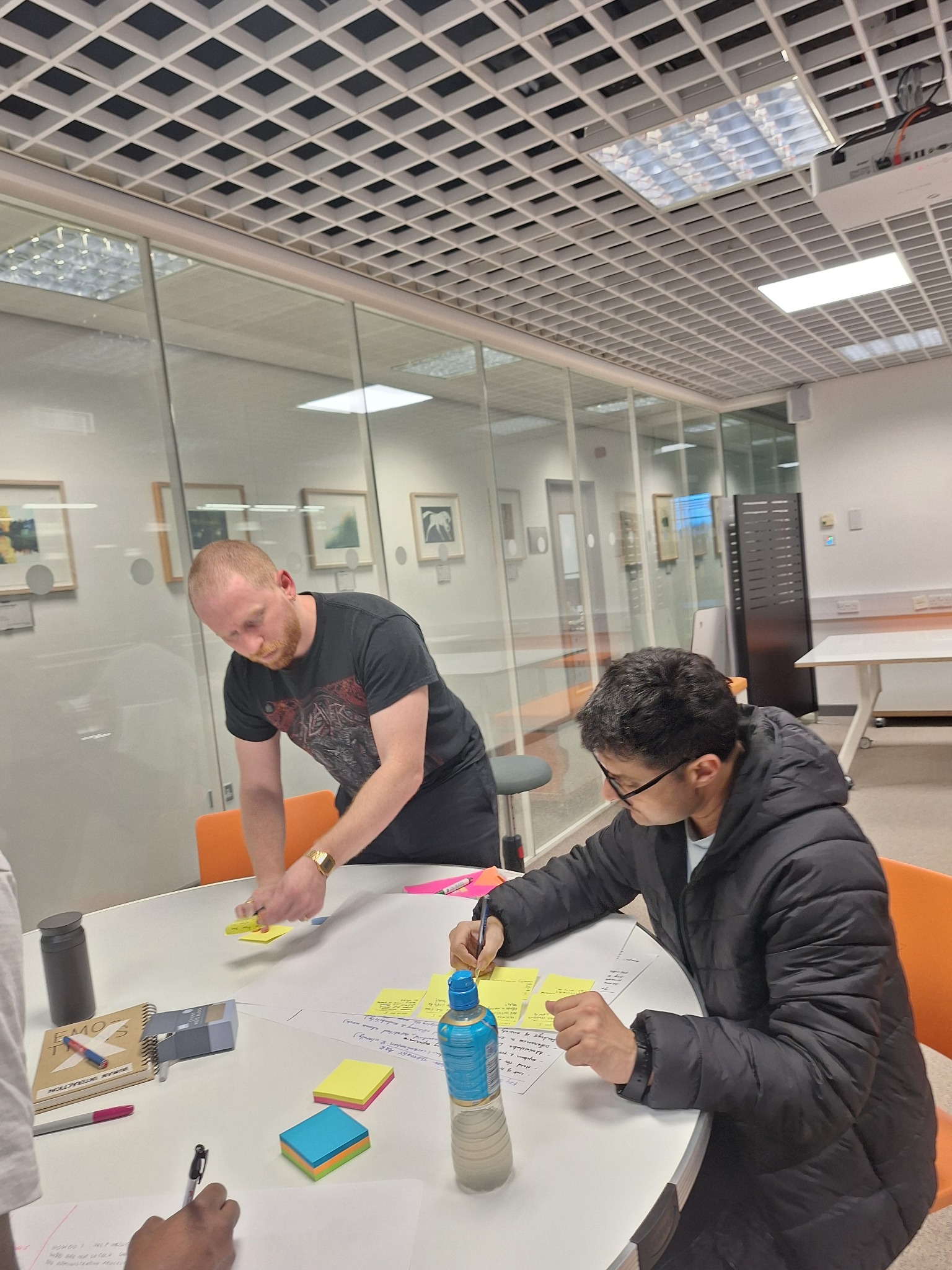
Two students writing and arranging sticky notes on a shared table.
Make thinking visibleUsing notes and shared surfaces to explore possibilities.
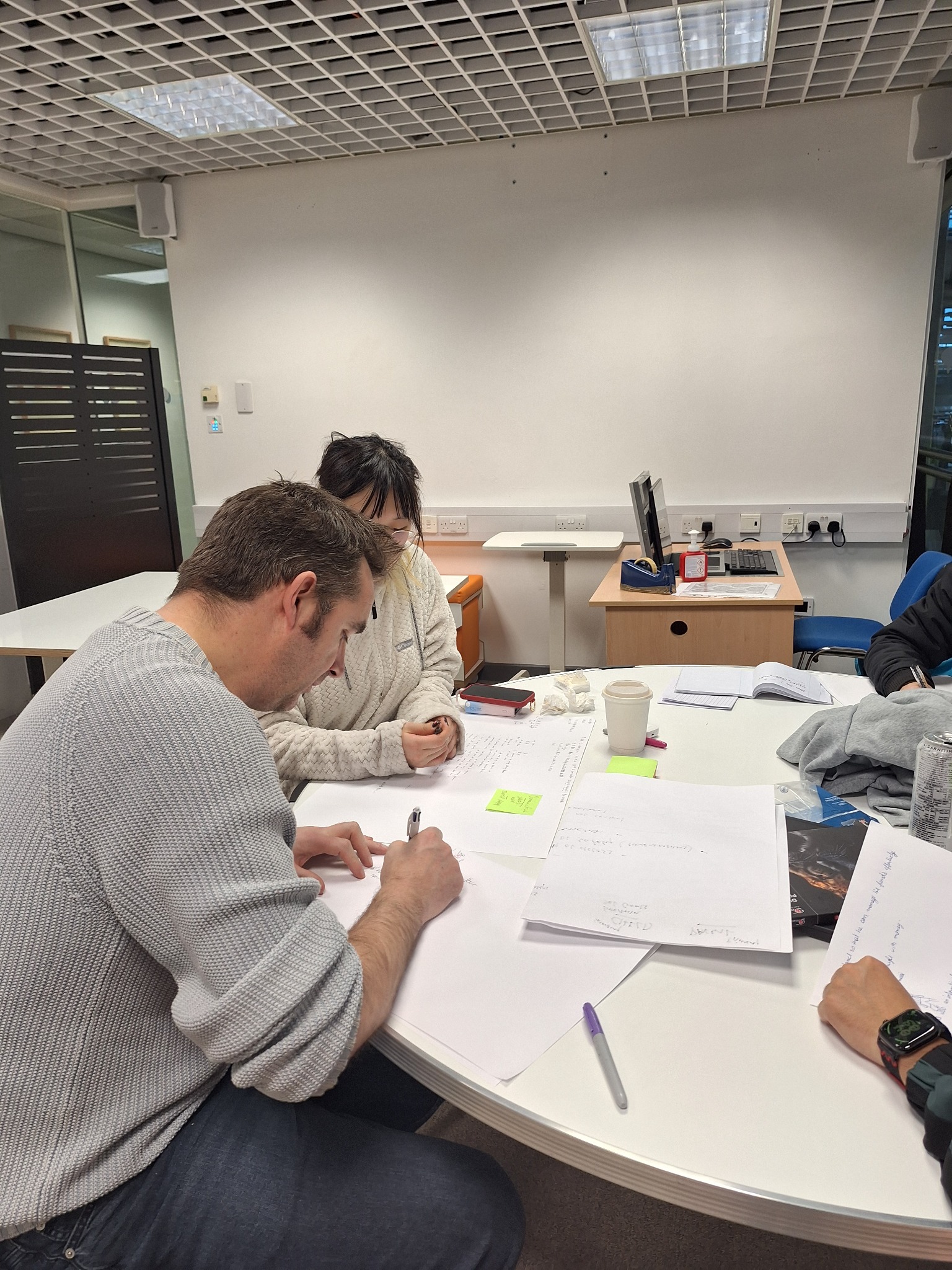
Students writing and reviewing handwritten sheets together.
Work through ideasWriting, reflecting and building on one another’s contributions.
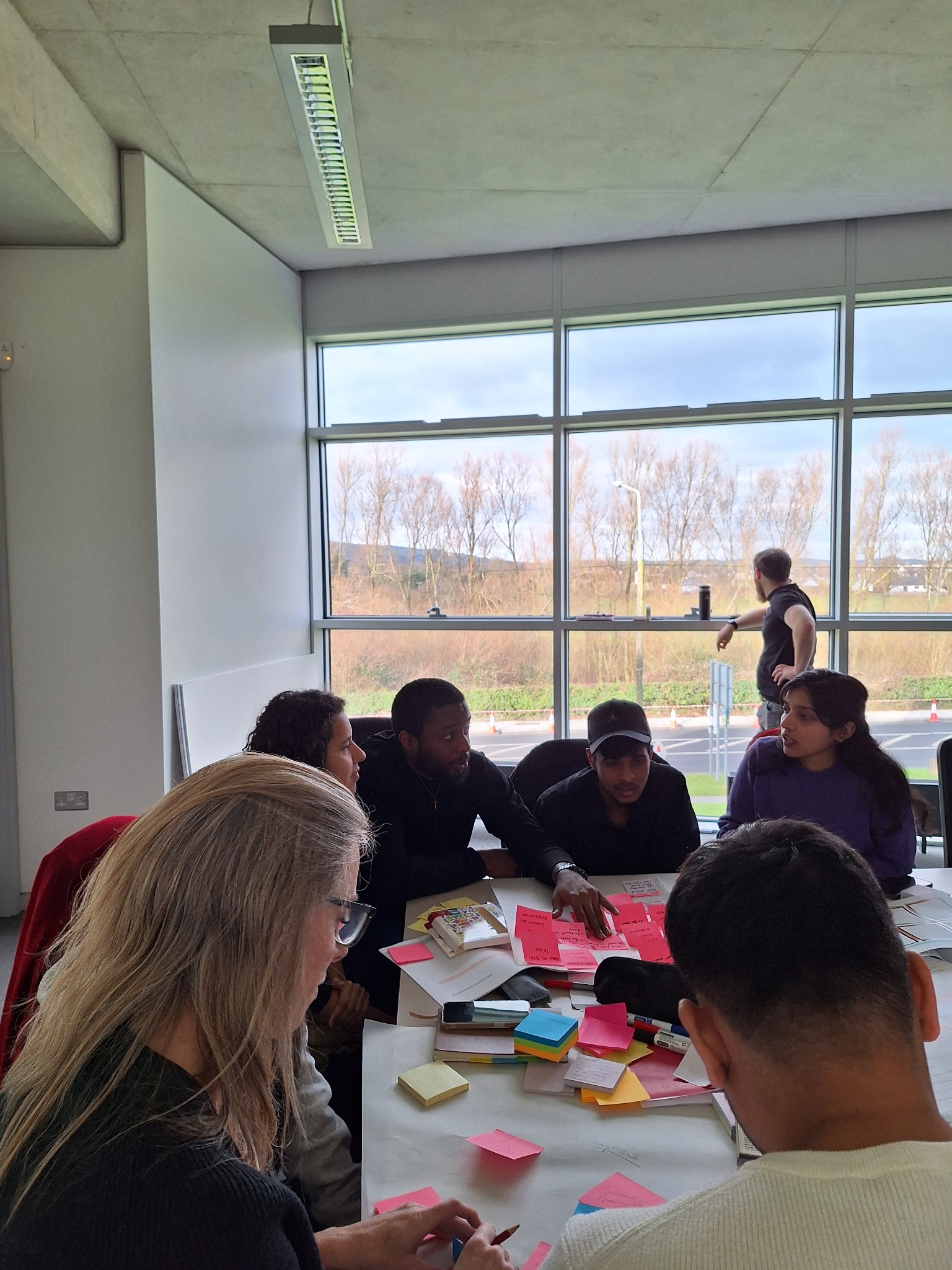
Students gathered around a table by a window, discussing ideas on pink sticky notes.
Bring different perspectivesComparing ideas and discussing what matters to people.
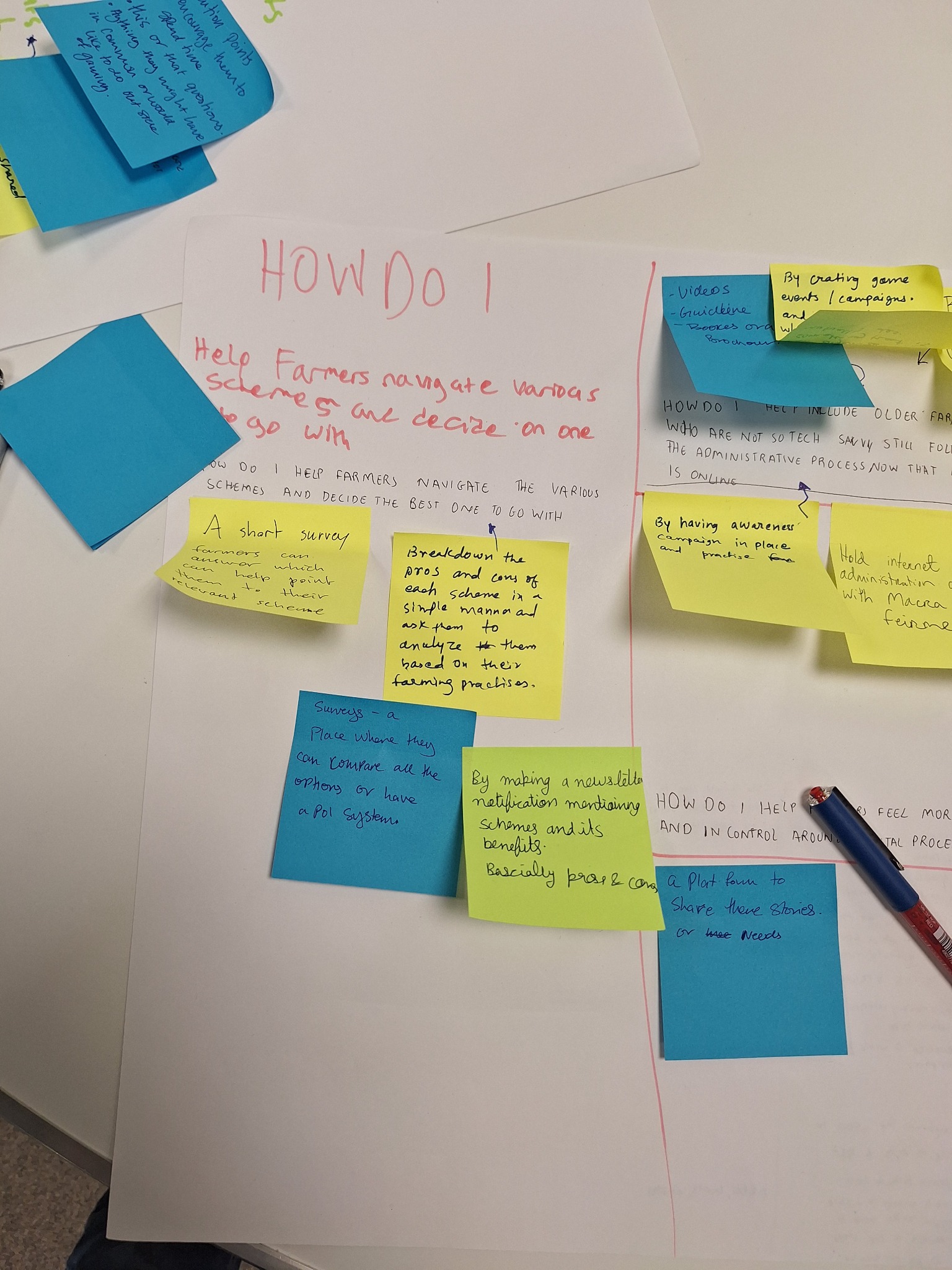
Handwritten design questions about farming schemes surrounded by blue and yellow sticky notes.
Frame a meaningful questionExploring how farmers might navigate schemes and administrative processes.
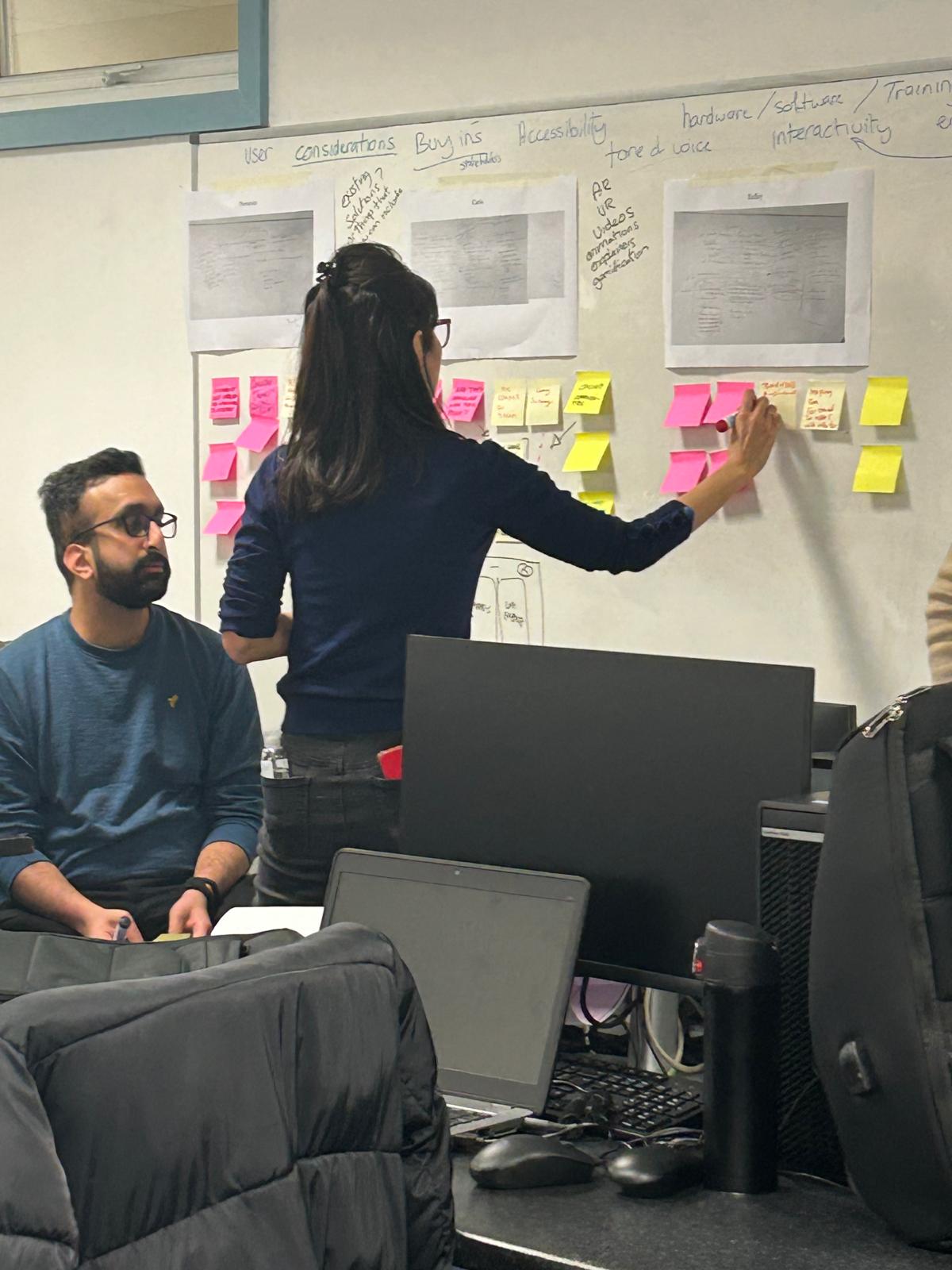
A participant placing sticky notes beneath printed sheets on a whiteboard, with another participant seated nearby.
Reflect and refineOrganising contributions and reviewing emerging themes.

Graduate perspectives

A different way of seeing and designing.

Studying Interaction Design in SETU was a game changer! It completely transformed how I see the world now, I design with the user at the heart of everything.

… The lecturers weren’t just teachers; they were mentors who guided, inspired, and challenged us to think beyond the obvious. They didn’t just deliver lessons, they brought design to life, involving us in real-world projects that shaped our future.

Hoda Nami Interaction Design graduate Testimonial excerpt

Throughout the course, the human-centric approach anchored on design thinking was emphasised, allowing me to embody this process in all design projects.

… I'd also say that one of the most valuable aspects of the course was its ability to instill in me a passion for design and to design for good.

Carla Anne Lloren MA Interaction Design graduate Testimonial excerpt

For companies and organisations

Bring a challenge. Start with the human need.

We welcome conversations with organisations interested in understanding the people who use their products, services or systems. You may wish to support an employee’s postgraduate development or explore a project opportunity with the programme team.

01 / Employee development

Support an employee’s postgraduate project

For employees who meet the programme’s entry requirements, a workplace challenge can provide the focus for an individually scoped postgraduate project, supported by academic supervision.

  • Investigate a customer, staff or service-user experience.
  • Explore a product, service or workplace interaction relevant to your organisation.
  • Develop and evaluate responses within the programme’s academic requirements.
Explore the MA

02 / Project collaboration

Develop a project brief with us

Discuss a challenge with the programme team and explore whether it can become a suitable student or research project. Together we can consider the people affected, access to participants, a realistic scope and the insights you hope to gain.

  • Bring an existing problem or an emerging opportunity.
  • Help students understand a real setting and reach relevant people.
  • Agree a brief, commitments and potential outputs before work begins.
Discuss a collaboration

What would you like to understand better?

You do not need a finished design brief to make contact. Tell us whose experience you want to improve, what happens today and what you hope to understand.

Start a conversation